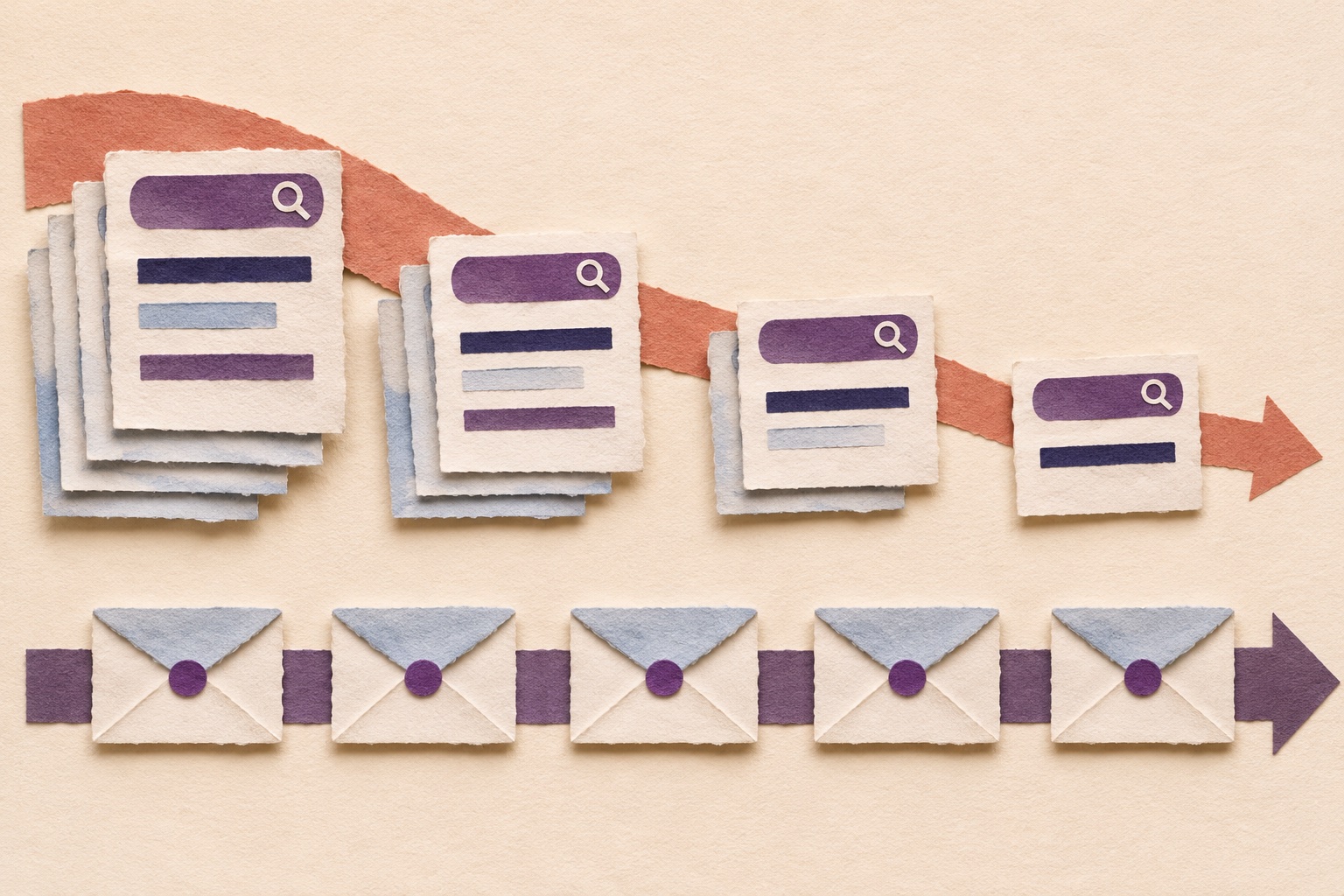
A monthly report can show fewer clicks from Google while the phone keeps ringing and orders keep coming in. The question is what those missing visits would have contributed to the business. A steady sales total does not settle it; customers may have arrived through another channel while search produced fewer inquiries.
HubSpot’s account of its declining blog traffic makes the distinction easier to see. Its experience cannot explain another company’s traffic; it shows why visits need to be read beside business results.
What HubSpot changed
HubSpot chief marketing officer Kipp Bodnar describes a decline in the company’s blog traffic. He says HubSpot had already started shifting effort away from broad informational articles toward video, podcasts, newsletters, and social media. He also distinguishes broad informational searches from searches with clearer buying intent.
HubSpot sells software and has its own mix of channels and customers. Its experience cannot tell a local service company, hotel, law firm, or online store whether a traffic loss is harmless. A general information article and a service or product page may contribute differently to an inquiry or sale.
A search click is one part of the result
Google Search Console shows what happened in Google Search before someone reached your site. An impression means a search result was shown, and a click means someone selected that result. Google Analytics measures what happened on the site afterward, including visits and actions such as a form submission or purchase. Google explains the different jobs of the two tools and why a Search Console click count will not match an Analytics session count exactly.
An impression, a click, an inquiry, and a sale describe successive parts of the same path. A report can show the first two without showing whether the inquiry became completed work or revenue.
The business result may require a booking system, sales records, or a conversation with the person answering the phone. Analytics can record a form submission; it cannot tell you whether every inquiry became a paying customer.
If impressions are steady but clicks fall, the searches and pages that lost those clicks deserve a look. If clicks hold steady but inquiries fall, the change may be happening after visitors arrive. Neither pattern identifies a cause by itself.
What a decline can mean for a business
A decline in broad informational articles may have a different business effect from a decline on pages where people request a quote, reserve a room, or buy a product. Search Console can show changes by page and search query; Analytics can show the actions visitors took after arriving. Those measures can then be compared with inquiries, accepted jobs, bookings, or sales recorded by the business.
The business consequences depend on the pattern:
- If search clicks and inquiries from search both fall, there is a potential customer problem to investigate, even if total sales are steady for now.
- If clicks fall while search inquiries hold steady, the lost visits may have come from people less likely to contact the business. That is a possibility to test against the affected pages and queries, not a conclusion from the totals alone.
- If total sales rise while search clicks fall, the increase could come from another channel, more returning customers, or larger orders. The sales total cannot tell us which explanation is right without reliable attribution and business records.
A report may still miss part of a customer’s path. A person may find a business in Google, return later by typing its name, and then call. A website report may record the visit and the call separately without proving the whole path. When the path is incomplete, say so. Do not turn an imperfect attribution report into a precise story about where every customer came from.
A drop still needs an explanation
Google’s guide to search-traffic declines lists several possible causes, including technical problems, changes in search demand, and changes in Google’s systems. It recommends looking at the pattern across pages and time before making large changes. A decline in visits is evidence that something changed; it is not evidence of one particular cause.
The same caution applies to rankings. A page can appear in different positions under different search conditions, and an average position summarizes many observations. Our article on why a Google ranking is not a fixed number explains why one manual search should not carry the weight of a performance report.
I would not call a traffic decline harmless because sales held steady for one month. If the missing clicks came from pages that bring qualified inquiries, that loss deserves attention. If inquiries remain steady, the change may be in the mix of visitors instead. The business result determines how urgently we respond; the search data helps explain what changed.